
Is the present a shadow of the future?

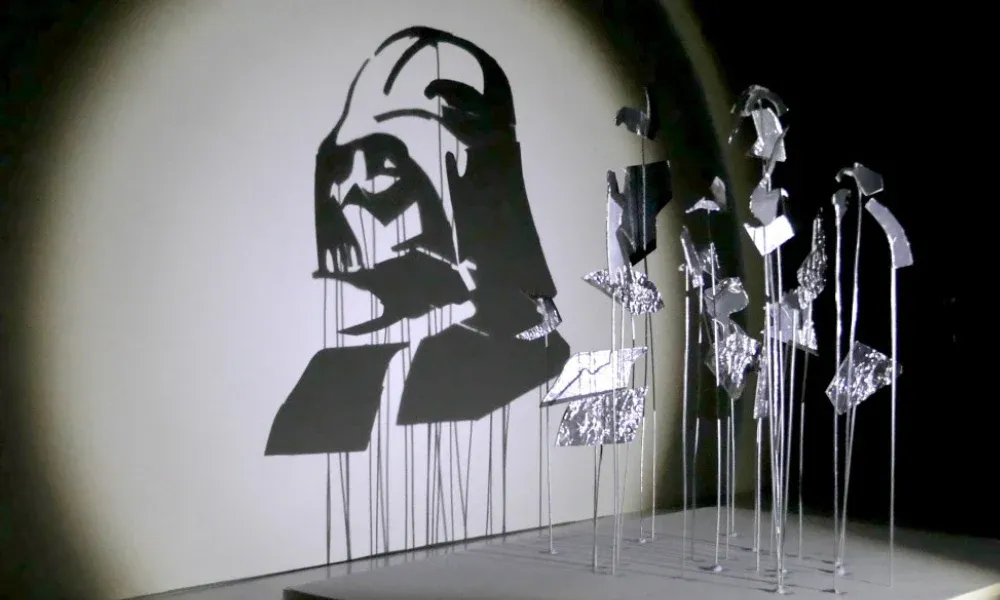
Musings and reflections on three great books that truly captured my heart and mind
Books:
- Hertog, Thomas. On the Origin of Time: Stephen Hawking’s Final Theory. First edition. Bantam, 2023.
- Polsley, Cynthia C. The Bible and the Holographic Universe: A Christian’s Practical Guide to the Universe, the Multiverse and Bibleverse. 2022.
- Wright, N. T. Surprised by Scripture: Engaging Contemporary Issues. FIRST EDITION. HarperOne, 2014.
My previous articles on formresilience.com have also provided inspiration for this article.
Introduction: When Two Horizons Meet
For centuries, the prevailing narrative has often cast science and faith as adversaries locked in a zero-sum conflict. One horizon is seen as the domain of empirical fact, the other of subjective belief, with an unbridgeable chasm between them. Yet a remarkable convergence of thought from a physicist, a theologian, and a biblical scholar suggests this perceived conflict is a profound misunderstanding. The insights of Thomas Hertog (Stephen Hawking's final collaborator), Cynthia Polsley, and N.T. Wright suggest these two horizons are not opposed but are, in fact, telling a single, coherent story about the nature of reality.
This article explores seven of the most surprising and impactful takeaways from this unified vision, revealing a cosmos far stranger, more intelligent, and more purposeful than either rigid scientism or conventional religion has allowed us to imagine.
1. The Universe Isn't Just Expanding; It’s Being Created from the Future.
The standard cosmological story begins with the Big Bang, a singular point in the distant past from which all of space, time, and matter exploded into being. Thomas Hertog, building on Stephen Hawking's final theory, presents a revolutionary and counter-intuitive alternative: a "top-down" cosmology where the universe's true origin lies not in its past but in its distant future.
In this model, the future perfected state of creation—what theologians call the eschaton—is the actual source of our reality, the boundary condition towards which the entire created order is being drawn and by which it is ultimately defined. Hertog and his colleagues propose something that modern physics had thought impossible:
"Some theorists have gone as far as suggesting that spacetime is a quantum code. They regard the lower-dimensional hologram as some sort of source code, operating on a huge network of interconnected quantum particles, processing information and, in this way, generating gravity and all other familiar physical phenomena. In their view the universe is a kind of quantum information processor."
2 Peter 3:10–13 can then be read as describing the moment when this future source fully “breaks through” (which may have been the case in situations like the vision in Ezikiel 1) into the present order in a fiery, dissolving judgment, in which “the earth and the works done in it will be found / laid bare” (εὑρεθήσεται), exposing creation and its works for what they truly are so that what is corrupt can be judged and removed and what accords with God’s will can belong to the promised “new heavens and a new earth, where righteousness dwells.”
This perfected state reaches backward through time, continuously actualizing the universe we experience. Time, in this view, is not a simple linear progression from past to future but the ongoing manifestation of a reality being pulled toward its own glorious completion. As support of this inference, N. T. Wright explicitly reads “on earth as in heaven” as the overlap and eventual full interlocking of heaven and earth, climaxing in the New Jerusalem descending to earth (Revelation 21-22). He emphasizes that the point is not escape from earth but heaven and earth “overlap and interlock” and one day “will do so fully and for ever". Which is supported by verses such as Matthew 6:10 and Luke 11:2.
As Hertog explains, this idea arises from the holographic principle, which posits that our three-dimensional universe is a projection of information encoded on a two-dimensional boundary. The full picture, the complete information, only becomes clear from the perspective of the end.
"In this sense holography places the true origin of the universe in the distant future, because only the far future would reveal the hologram in its full glory."
This simple inversion transforms everything. It reframes our existence not as a random walk away from a chaotic beginning, but as a creative unfolding pulled toward a deeply purposeful end.
2. Sin Isn't Just a Moral Failure; It's Cosmic "Information Decay."
If the universe is being pulled into being from a perfected future, as Hertog suggests, then the concept of sin takes on a new, cosmic dimension. In a universe sustained by coherent information—what Cynthia Polsley calls a "holomorphic system" (a reality where the whole is encoded in every part)—sin is not merely a personal moral failure but a corruption of the cosmic code, a "scrambling of the signal" that sustains reality.
The biblical story of the Fall of Adam and Eve can be read as the moment this degradation was introduced. This act didn't just break a rule; it introduced dissonance, noise, and signal loss into the informational pattern that held creation in harmony. The Hebrew word for sin, het (חטא), which literally means "to miss the mark," perfectly captures this idea of introducing a flaw into an otherwise coherent pattern.
Biblical scholar N.T. Wright’s insistence on the material consequences of the Fall gives Polsley's "information decay" its theological weight; this is not a spiritual metaphor but a description of physical reality, manifesting as entropy, biological suffering, and death. He argues that when the Apostle Paul writes of creation "groaning," he is describing:
"the audible, tangible, structural decay of the material cosmos itself—a world shot through with the consequences of human rebellion, now subject to futility, entropy, and death, awaiting its liberation."
This reframes the Law given to Moses not as a set of arbitrary rules designed to test obedience, but as a divine "error-correction protocol"—a set of instructions intended to maintain coherence in a degraded system. The prophets, in this light, were voices calling for cosmic re-synchronization, urging a return to the original divine pattern to restore coherence.
3. The Material World Is a Real "Shadow," Not a Fake Illusion.
When the New Testament describes the old covenant or its rituals as a "shadow" (skia) of things to come (Hebrews 10:1, Colossians 2:17), it’s easy to assume this means they were unreal or illusory. But Polsley and Wright recover a much richer meaning. In ancient Greek thought, a skia was not an illusion but a faithful, lower-dimensional projection of a higher-dimensional reality, much like the 2D shadow cast by a 3D object. The shadow is real; it participates in the reality it represents.
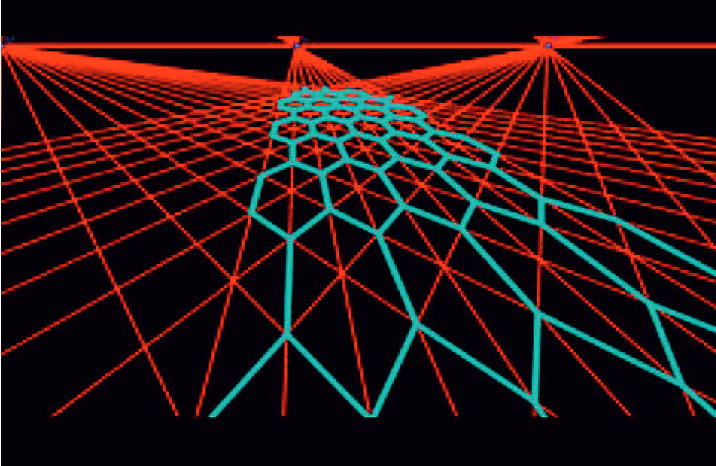
This means the material world is not a mistake to be escaped, but a genuine, if limited, representation of a greater, more substantial reality. The Tabernacle, for instance, wasn't just a symbol of heavenly things; it was a deliberately crafted "holomorphic projection," designed with fractal dimensions (fibbonacci) to encode the patterns of heavenly reality into material form. It was matter shaped and informed by the patterns of the eschaton, made present in history through human creativity and obedience to divine instruction.
Hertog writes: "Holography paints a universe that is being continually created. It is as if there is a code, operating on countless entangled qubits, that brings about physical reality, and this is what we perceive as the flow of time."
This aligns perfectly with N.T. Wright's core thesis that God's ultimate plan is not to help our souls escape from materiality, but to restore and transform material creation itself. The shadow of our current world points not toward a disembodied spirit realm, but toward what matter itself is destined to become—a gloriously physical, restored, and perfected creation.
4. The "Book of Life" Might Be the Universe's Quantum Hard Drive.
Scripture often references a "Book of Life," a divine record of those who belong to God. Polsley proposes that this is not a metaphor but a description of the actual encoding surface of reality itself. In this view, every thought, word, and deed is permanently inscribed as information at the quantum boundary of the universe.
This ancient intuition finds a striking parallel in modern physics. Hertog’s work references the Bekenstein Bound, a principle from black hole thermodynamics which states that all the information contained in a three-dimensional volume is encoded on its two-dimensional boundary. The psalmist seems to grasp this same concept thousands of years ago:
"Thine eyes did see my substance, yet being unperfect; and in thy book all my members were written, which in continuance were fashioned, when as yet there was none of them." (Psalm 139:16, KJV)
The Hebrew word for "written," katab, means literally "to inscribe" or "to record." Our very being is inscribed in the "book" of reality before it manifests in time. Furthermore, a fundamental principle of quantum mechanics is that information can never be destroyed. This gives profound theological weight to the idea that nothing is ever truly lost or forgotten; every act is eternally recorded in the fabric of the cosmos.
5. Christ (Logos) Was the "Uncorrupted Code" Inserted into a Glitching Reality.
If every action is permanently inscribed on a quantum "Book of Life," the implications of a corrupted system are terrifying. This sets the stage for the ultimate intervention: the insertion of an uncorrupted pattern into that glitching reality. In this vision, Jesus was a "non-corrupted Holomorph" inserted into the system, what Polsley calls the "Christological bridge."
This connects directly to the biblical concepts of the "Word" (dabar) and "Wisdom" (hokhmah), which in Hebrew thought were not abstract principles but active, creative powers that structure reality itself. In Jesus, the Gospel of John declares, this Word (Logos)—the coherent pattern itself—became flesh (John 1:1, 1:14). In this framework, Christ is not merely a human being with a divine nature added on. Rather, he is the Logos incarnate—the Code itself become flesh, the informational principle that structures all of reality become accessible, touchable, knowable in human form. The implications are staggering. Everything that exists—every atom, every galaxy, every form of life, every instance of consciousness—is an expression of the Logos. In Christ, the principle that generates reality becomes visible. The Code that actualizes the cosmos becomes a human being.
This is why Paul can say that in Christ "all things were created: things in heaven and on earth, visible and invisible... all things have been created through him and for him. He is before all things, and in him all things hold together" (Colossians 1:16-17). This is not metaphorical or merely spiritual truth; it is a statement about the fundamental structure of reality itself.
The Resurrection, then, is the ultimate proof that this uncorrupted code could not be overcome by the entropy and decay of the old system. The physicist and theologian John Polkinghorne describes the resurrection as establishing a "new regime" of reality, governed by new laws. As N.T. Wright puts it, the Resurrection is the starting gun for God's new project:
"Easter is not the point at which Jesus escapes from the material world; it is the point at which the material world itself starts to be transformed and redeemed."
6. All Evolution—Cosmic, Biological, and Spiritual—Is a Single, Unified Story.
Thomas Hertog makes a breathtaking connection that bridges the long-standing gap between physics and biology. He argues that cosmic evolution (the expansion of the universe) and biological evolution (the emergence of life) are not separate, unrelated processes. Instead, they are two stages of a single, overarching story of holomorphic actualization.
"Quantum cosmology in some sense bridges that gnawing conceptual chasm that for eons has separated biology and physics. It tells us that Darwin's sketch of the tree of life and Lemaître's sketch of a hesitating universe … are deeply connected, representing two stages of a single overarching historical process."
The theological importance of this is immense. It suggests that the emergence of consciousness is not a random accident in a meaningless universe but a manifestation of the divine intention encoded into the cosmos from its future state. In this light, the Incarnation of the Logos is not an interruption of evolution but the fulfillment of its deepest logic—the moment when the intelligence guiding the entire process becomes visible within it.
7. God Orchestrates Freedom, He Doesn't Overwrite It.
The paradox is ancient: if God is sovereign and knows the future, how can human beings be truly free? The theological framework of Molinism offers a solution that finds a powerful analogy in Polsley's synthesis. Molinism proposes that God's knowledge includes "counterfactuals"—what any free agent would choose in any possible circumstance. The reference to 1 Samuel 23 is particularly apt here. When David asks God whether the people of Keilah will betray him if he stays in the city, God answers affirmatively—not because the future is determined, but because God knows what the people would freely choose.
Polsley visualizes this with the image of a "gigantic bubble of spacetime." From our perspective inside the bubble, we experience genuine freedom, an open future, and the weight of real choices. From God's perspective at the boundary, however, the entire structure of spacetime—every choice and consequence—is visible at once. This inference aligns strongly with scriptural passages such as “I am the Alpha and the Omega, the first and the last, the beginning and the end.” (Revelation 22:13 ESV).
Like a chess master operating on the matrix grid of a chess board, God orchestrates circumstances so profoundly that our free choices naturally tend toward the Master's intended outcome without violating our agency. This pure active information (as Polkinghorne termed it) "guides" the system along its course, serving as a non-local informational flow that "in-forms" the world rather than forcing it - the matrix's composer we could say (a reference to Max Planck's assertion that God is the 'matrix of all matter'). The opponent's moves are genuinely free, yet because the Master has already perceived all possible histories and provided the coherent "light-thread" of his intended blueprint, the ultimate victory is never in doubt. This is a vision of divine sovereignty that works through, not against, authentic human freedom.
Conclusion: Living in the Light of the Future
When woven together, these ideas from ancient scripture and contemporary physics point toward a universe that is a vast, intelligent, and loving actualization of divine intention. This is not a static, clockwork cosmos but a dynamic reality being continuously created from its own perfected future.
This vision gives our present choices eternal significance. We are not just passing time in a decaying world, waiting for an escape. We are active participants in the great work of restoration, co-workers with the future as it reaches into our present. Every act of justice, mercy, and beauty is a participation in the actualization of the New Creation.
If the future perfected kingdom is already reaching back to shape our present, what choices can we make today to align ourselves with the coherence, justice, and beauty it embodies?
Additional references that also inspired this post:
- Polkinghorne, J. C. Quantum Physics and Theology: An Unexpected Kinship. Yale University Press, 2007. http://catdir.loc.gov/catdir/toc/ecip0618/2006024231.html.
- Majid, Shahn. On Space and Time. Canto Classics. Cambridge University Press, 2012. https://doi.org/10.1017/CBO9781139197069.
- De Chardin, Pierre Teilhard. The Phenomonen of Man. Harper Perennial, 2008.